Choosing between natural sod and artificial turf is one of the most important landscaping decisions homeowners in Middle Tennessee can make. While a lush green lawn enhances curb appeal and outdoor enjoyment, our region’s unique climate and soil conditions make lawn care more challenging than many homeowners expect.
From the rolling neighborhoods of Nashville and Brentwood to the growing communities of Franklin, Mt. Juliet, and Lebanon, homeowners face everything from heavy seasonal rainfall and clay-rich soil to intense summer heat and shaded lots. Understanding how natural sod compares to modern synthetic turf can help you make the best long-term investment for your property, lifestyle, and maintenance preferences.
Understanding Middle Tennessee’s Lawn Challenges
Middle Tennessee presents a unique environment for maintaining healthy grass. Frequent rainstorms can lead to drainage issues, while our dense clay soil often struggles to absorb water efficiently. Add in long, hot summers and shaded areas beneath mature hardwood trees, and it’s no surprise that many homeowners find themselves constantly repairing or replacing sections of their lawn.
Let’s take a closer look at how natural sod and artificial turf perform under these local conditions.
1. Clay Soil and Drainage Performance
The Challenge with Natural Sod
Much of Middle Tennessee is dominated by heavy clay soil. During periods of intense rainfall, especially in areas like Lebanon and Mt. Juliet, clay soil absorbs water slowly. This often results in:
- Standing water after storms
- Muddy patches throughout the yard
- Oversaturated root systems
- Increased lawn damage and thinning grass
Homeowners frequently find themselves battling drainage problems that affect both the appearance and health of their lawn.
How Artificial Turf Solves the Problem
A professionally installed artificial turf system is built from the ground up to manage drainage efficiently. The installation process typically includes:
- Excavation of existing topsoil
- Installation of a compacted crushed-stone sub-base
- Use of permeable turf backing designed for rapid drainage
Many premium synthetic turf systems can drain up to 30 inches of water per hour, significantly reducing standing water and eliminating muddy conditions after heavy rain.
2. Shaded Lots and Mature Tree Canopies
The Challenge with Natural Sod
Established neighborhoods throughout Franklin, Brentwood, and Greater Nashville often feature beautiful mature hardwood trees. While these trees add character and shade, they can make it difficult for grass to thrive.
Popular turf varieties such as Tall Fescue and Bermuda grass require substantial sunlight to remain healthy. Under dense tree canopies, homeowners often experience:
- Thin or patchy turf
- Weed and moss growth
- Constant reseeding efforts
- Bare spots that continue to worsen over time
How Artificial Turf Performs in Shade
Artificial grass requires no sunlight to maintain its appearance. Whether installed beneath mature trees, along shaded fence lines, or under covered outdoor living areas, synthetic turf remains:
- Consistently green
- Evenly textured
- Free from thinning and patchiness
- Attractive throughout every season
For heavily shaded areas where natural grass struggles to survive, artificial turf provides a reliable solution.
3. Durability, Foot Traffic, and Pet Friendliness
The Challenge with Natural Sod
Families, pets, and outdoor activities can quickly take a toll on traditional lawns. Common issues include:
- Bare spots from heavy foot traffic
- Nitrogen burns caused by pet urine
- Digging and wear from active dogs
- Ongoing overseeding and repairs
Keeping natural sod looking its best often requires significant time and effort.
Why Homeowners Choose Artificial Turf
Modern synthetic turf systems are engineered for durability and everyday use. High-performance turf fibers combined with specialized pet-friendly infill create a surface that can withstand:
- Active children and play areas
- Multiple pets
- Frequent entertaining
- Year-round use
Additionally, homeowners enjoy the benefit of a cleaner yard with less mud being tracked into the home after rain or outdoor activities.
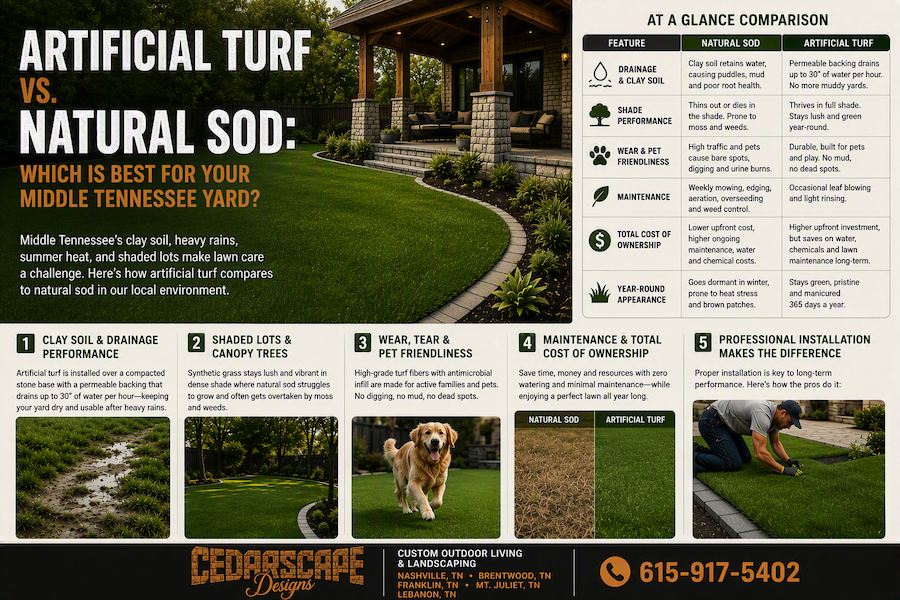
4. Maintenance and Long-Term Cost Comparison
While natural sod generally costs less upfront, long-term ownership expenses can add up quickly through mowing, watering, fertilizing, and seasonal lawn treatments.
Natural Sod vs. Artificial Turf
Natural Sod
- Lower initial installation cost
- Requires weekly mowing and edging
- Needs aeration, fertilization, and overseeding
- High water consumption
- Can become brown or dormant during extreme weather
Artificial Turf
- Higher upfront investment
- Minimal maintenance requirements
- No watering or lawn chemicals needed
- Consistent appearance year-round
- Long-lasting performance with proper installation
For many homeowners, the reduced maintenance and elimination of ongoing lawn care expenses make synthetic turf an attractive long-term solution.
5. What Makes a Professional Turf Installation Successful?
The quality of the installation plays a major role in the performance and lifespan of an artificial lawn. Experienced landscape and hardscape professionals focus on several key areas:
Sub-Grade Excavation
Removing existing clay soil creates space for a stable and properly draining foundation.
Advanced Base Preparation
Layers of crushed aggregate are installed and compacted to prevent settling and promote effective drainage.
Precision Edging and Integration
Turf is carefully secured around patios, pavers, landscape beds, and retaining walls for a clean, finished appearance.
Proper Infill Application
Specialized infill materials help support the turf fibers, improve cushioning, and ensure long-term durability.
Final Thoughts: Which Option Is Right for You?
If you enjoy traditional lawn care and prefer the look and feel of living grass, natural sod can still be an excellent choice. However, homeowners facing persistent drainage issues, excessive shade, pet damage, or high maintenance demands often find artificial turf to be the more practical and cost-effective solution.
For properties throughout Nashville, Brentwood, Franklin, Mt. Juliet, and Lebanon, synthetic turf offers a consistently green, low-maintenance landscape that performs well in Middle Tennessee’s challenging climate.
Ready to Upgrade Your Outdoor Space?
Whether you’re considering premium artificial turf, custom hardscaping, or a complete landscape transformation, our experienced team is here to help. Contact us today for a personalized property evaluation and discover the best solution for your Middle Tennessee home.