Middle Tennessee Drainage Solutions: How Hardscape & Landscape Experts Fix Soggy Yards
Middle Tennessee’s landscape presents a unique set of challenges for homeowners. Between heavy rainfall, rolling topography, and dense clay soil, standing water and erosion are common issues throughout the Greater Nashville region. Whether you own a home in Nashville, TN, Brentwood, TN, Franklin, TN, Mt. Juliet, TN, or Lebanon, TN, understanding why drainage fails in our local climate—and how to fix it—will protect your home’s foundation and preserve your landscape investment.
1. The Key Causes of Poor Drainage in Middle Tennessee
- High Clay Content: Middle TN soils in areas like Lebanon and Mt. Juliet are predominantly heavy in clay, which absorbs water slowly and leads to persistent surface pooling.
- Karst Topography & Shallow Limestone Bedrock: Common across Franklin and Brentwood, shallow bedrock layers prevent water from soaking deep into the ground, forcing it to travel across the surface.
- Heavy Rainfall Events: The greater Nashville area receives over 50 inches of rain annually, often coming in intense storms that overwhelm traditional yard grading.
- Improper Grading: Water naturally follows the path of least resistance. If your yard slopes toward your house, runoff will pool directly near the foundation.
2. Practical Drainage Solutions for Middle TN Landscapes
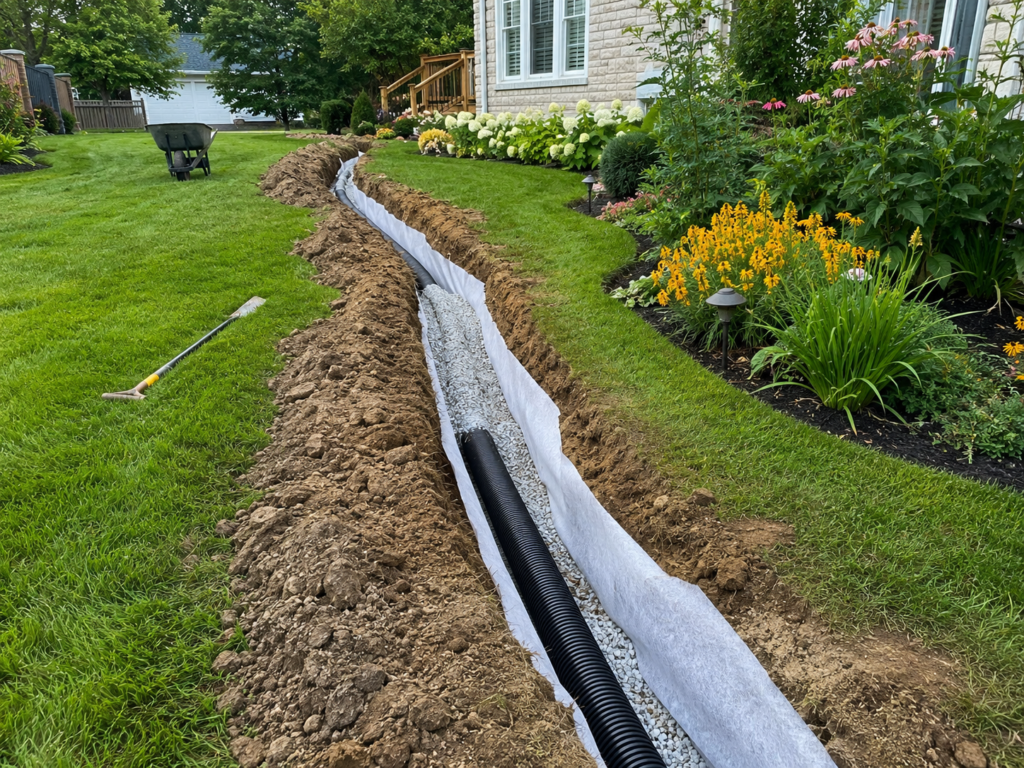
- Install a French Drain: Ideal for subsurface water and soggy lawns. A perforated pipe wrapped in filter fabric is buried in a gravel trench to redirect groundwater away from problem areas.
- Add a Catch Basin: Best for standing surface water in low spots. Catch basins collect runoff through a surface grate and pipe it to a safer discharge point.
- Extend Downspouts: Roof runoff accounts for thousands of gallons of water per storm. Routing downspouts underground via solid PVC pipes at least 10 feet away from the home prevents costly foundation damage.
- Re-Grading and Swales: Creating a subtle, grass-lined ditch (swale) or adjusting lawn slopes directs surface water smoothly around your home and off the property.
- Build a Rain Garden: A natural, low-maintenance hardscape and planting option that uses water-loving native plants to absorb excess moisture in low areas.
3. Step-by-Step: How Hardscape & Landscape Pros Fix Surface Water Problems
- Identify the Source: Walk your property during a heavy rainfall event in Nashville or surrounding areas to mark standing water spots and track where runoff originates.
- Determine the Discharge Point: Locate a safe outlet downhill for the water to drain (such as toward a street, a pop-up emitter, or a natural runoff area).
- Select the Right Drainage System: Use French drains for wet soil, catch basins for surface puddles, and buried solid pipes for downspouts.
- Excavate & Slope the Trench: Dig a trench with a minimum 1% drop (1 foot of fall for every 100 feet of pipe) to ensure gravity carries the water away from your foundation.
- Install & Backfill: Lay filter fabric, add a base layer of washed river stone, install the pipe, add more stone, and wrap the fabric before covering with topsoil or turf.
Looking for professional hardscaping or custom drainage solutions in Nashville, Brentwood, Franklin, Mt. Juliet, or Lebanon, TN? Contact our team today to schedule a free on-site property evaluation.