If you have ever watched water pool in the low corner of your backyard a day after a storm, you already know that drainage is not a small detail in Middle Tennessee. Between steady rainfall, sloped lots and soils that do not always drain well, water management is one of the biggest factors in whether a yard, patio or retaining wall holds up over the years.
Why Water Is a Bigger Issue Here
The National Weather Service puts Nashville’s average annual precipitation at about 50.5 inches, and the city sees roughly 13 days a year with an inch or more of rain. The wettest 24-hour period on record in the climate summary is 7.25 inches, during the historic flooding of May 2010. Even in a normal year, a big storm can send a lot of water across your property in a short time.
The ground matters too. University of Tennessee Extension materials describe soils on many Highland Rim slopes as forming from limestone with clayey subsoils, and describe parts of the Nashville Basin as having shallow soils, exposed limestone and poor surface drainage. In plain terms, many Middle Tennessee yards cannot soak up a heavy rain quickly, so water has to be guided somewhere on purpose.
What Poor Drainage Does to a Property
- Standing water and soggy lawns. Low spots stay wet for days, killing grass and turning into mud.
- Foundation and crawlspace problems. Water that collects against the house works its way into basements and crawlspaces.
- Erosion. Fast-moving runoff carries soil off slopes and out from under mulch beds, walkways and edges. We cover this in more detail in our guide on how to fix backyard erosion.
- Sinking patios and walkways. If water undermines the base under pavers or concrete, the surface settles and shifts.
- Failing retaining walls. Trapped water behind a wall builds pressure that pushes it forward.
What Good Drainage Looks Like
Good drainage is usually a combination of small, well-planned pieces rather than one big fix:
- Grading that slopes away from the house. The ground should fall away from the foundation, not toward it.
- Downspout extensions. Roof water should be carried well past the foundation instead of dumping at the corner of the house.
- French drains. A perforated pipe set in a gravel-filled trench collects water and carries it to a safe outlet.
- Swales and dry creek beds. Shallow channels, often lined with stone, guide runoff across a yard and can double as a landscape feature.
- Rain gardens. A planted low area that catches runoff and lets it soak in gradually.
- Planting for stability. Deep-rooted native plants and groundcovers help hold soil and slow water down.
Drainage and Hardscape Go Together
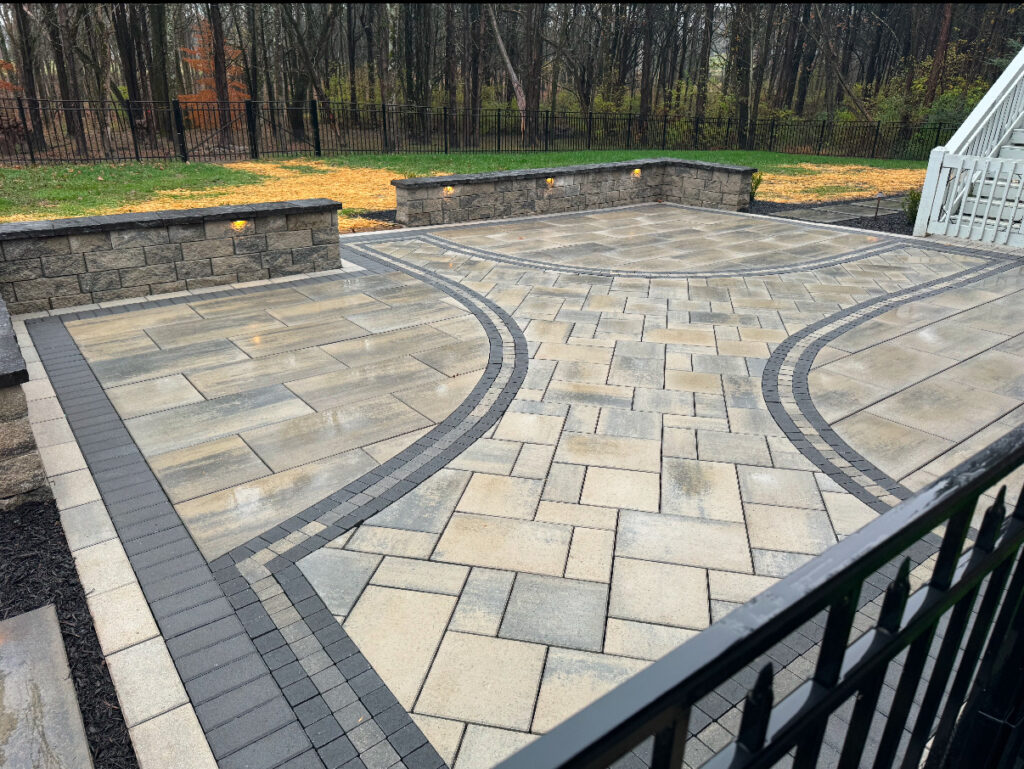
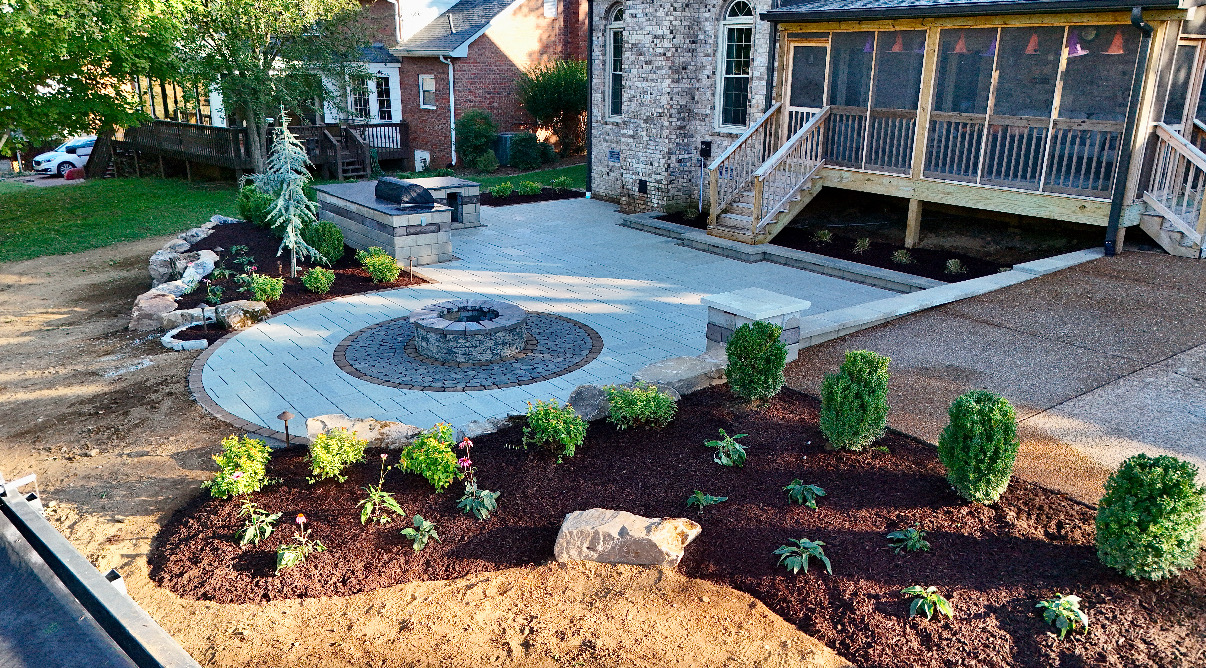
A patio, walkway or retaining wall is only as good as what is underneath it. A properly built paver patio starts with excavation, a compacted gravel base and a surface graded so water runs off instead of pooling. A retaining wall needs gravel backfill and drain pipe behind it so water can escape. This is why we pay close attention to drainage on hardscape projects, and it is why we back our paver patios with a 10-year no sink, no settle warranty.
If you are planning a new patio, take a look at our paver patio services in Nashville. And for the numbers behind Nashville’s rainfall, you can see the National Weather Service’s Nashville climate records.
Signs Your Yard Needs Attention
- Water sits for more than a day or two after a rain
- Mulch or soil washes onto walkways or driveways
- You see cracks, gaps or low spots forming in a patio or walkway
- Water collects against your foundation
- A retaining wall is leaning, bulging or has water seeping through it
Ready to Talk About Your Project?
Cedarscape Designs serves Nashville, Mt. Juliet, Lebanon and the surrounding Middle Tennessee communities with a combined team expertise of over 25 years. Call us at 615-917-5402 or request a free consultation and we will walk your property with you.